Ryan Kerley
Students who live in select resident halls on the University of Georgia’s campus are forced to follow strict rules- some of them extending to their use of restrooms.
“The shower stalls and bathroom stalls are divided up by room numbers,” said Russell Hall resident assistant Chloe Darveau.
Darveau, a sophomore, is one of the people who is tasked with enforcing the rules that COVID-19 has caused to be in play.
When COVID-19 began to spread in the United States, the health of students became the top priority for universities, resulting in a transformation in how students live on campus.
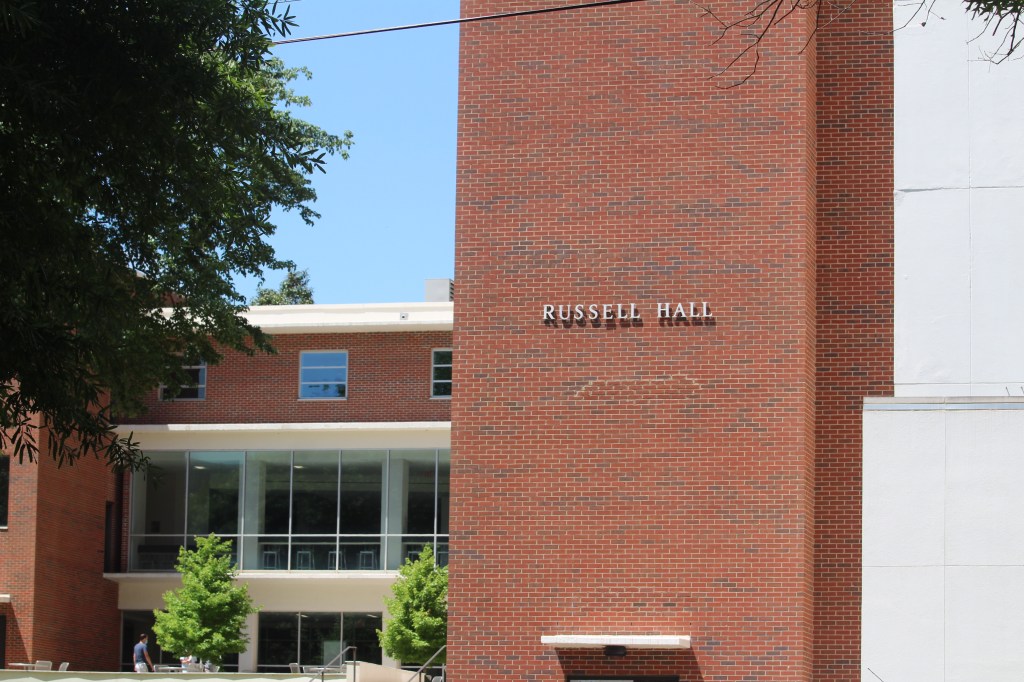
The University of Georgia imposed several safety protocols that go beyond wearing masks and social distancing to ensure that students could return to campus in the fall of 2020. However, these new policies continue to completely change how students who live on campus carry out their daily lives.
Residence halls are normally a hub for students to hangout and interact. Certain dormitories at UGA occupy up to around 1,000 students, so in order to battle a pandemic, several restrictions and standards were created.
Contrary to before the virus outbreak, students are not permitted to visit each other if they do not live in the same dorms. Not only are residents restricted from visiting other buildings, but they are not granted access to different halls beside their own inside the buildings in which they live.
Darveau also lived on campus her freshman year and acknowledges that the guest policy has “been one of the biggest changes.”
Some of the safety rules seem extreme, however, that is the reality that students are faced with when living in campus housing. The university’s priority is safety when installing the various rules, but there is no doubt it inhibits the social aspect for students.
Similar to the residence halls, the dining halls on campus were common areas for students to socialize, grab a bite of food and relax in between classes. The dining halls also had to make major changes to ensure the safety of students and staff during the pandemic.
“Dining Services adapted to offer students the ability to not only dine-in, but also take food to-go from available stations or order ahead and pick-up grab-and-go items from select locations,” said Executive Director for Dining Services Bryan Varin in an email. “This helped offset seating that was reduced and spaced out to ensure social distancing in the locations.”
At the beginning of the school year, some of the dining halls were exclusively offering to-go meals. Overtime, they have transitioned to allowing students to eat inside at a limited capacity, but Varin reiterated that the staff’s top priority is safety.
The majority of students who live on campus are freshmen, and two of the top places for them to meet new people and socialize are completely different with all of the protocols.
Safety is obviously the top priority of the university, but living on campus and the freshman year experience has significantly changed.
 Ryan Kerley